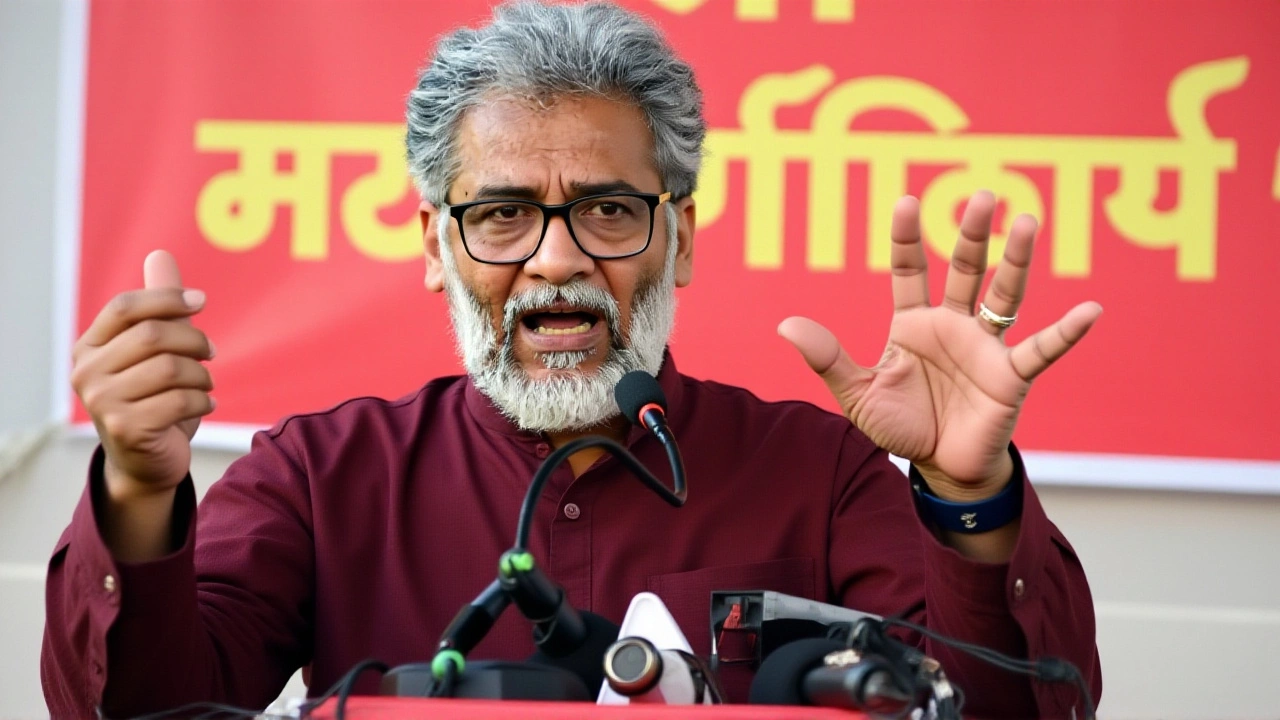
For the first time in recent memory, Rahul Gandhi, Leader of the Opposition in the Lok Sabha and senior leader of the Indian National Congress, has released a speech originally delivered to an internal gathering of opposition leaders. This move, described by political analysts as unprecedented, marks a significant shift in transparency for the Indian National Developmental Inclusive Alliance (INDIA bloc). The decision to share these remarks with the public has ignited a fresh debate about the future strategy and cohesion of India’s fragmented opposition.
The twist is that this isn't just another press release. It represents a deliberate break from the closed-door diplomacy that has characterized coalition building in New Delhi for years. By opening the black box of alliance negotiations, Gandhi appears to be signaling a new era of accountability—or perhaps, a desperate bid to rally public sentiment ahead of critical state elections.
A Rare Glimpse Behind Closed Doors
Here's the thing: opposition alliances in India are notoriously opaque. Leaders meet in private hotels, shake hands on seat-sharing formulas, and rarely discuss their strategic disagreements in public. But wait—Gandhi changed the script. According to reports from the Hindi news portal *Jan Chouk*, he explicitly stated that this was likely the "first occasion" where an internal address to the INDIA bloc leadership was made available to the general public.
This wasn't a casual tweet or a soundbite clipped for evening news. It was a full speech, laid bare for scrutiny. The implication? That the opposition believes the electorate deserves to know not just what they stand against, but how they plan to organize themselves against it. For a bloc comprising over 26 diverse parties, ranging from regional heavyweights to small ideological groups, such transparency is both risky and revealing.
The Voice of Resistance: Deepankar Bhattacharya’s Analysis
The significance of this moment hasn't gone unnoticed across the political spectrum. Deepankar Bhattacharya, National General Secretary of the Communist Party of India (Marxist-Leninist) Liberation, penned a detailed analysis titled "Resistance, New Beginnings, and the Future of the 'India' Alliance." Published on *Jan Chouk* and widely shared on the party’s official Bihar Facebook page, Bhattacharya’s piece frames Gandhi’s move within a broader narrative of democratic resistance.
Bhattacharya, who has led his party since 1998, views this transparency through the lens of constitutional struggle. He connects Gandhi’s openness to larger battles facing Indian democracy, including controversies surrounding the Citizenship Amendment Act (CAA), the National Register of Citizens (NRC), and the politicization of the military. For Bhattacharya, this isn't just about electoral tactics; it's about reclaiming democratic space.
"This is perhaps the first time," Bhattacharya notes, highlighting the rarity of the event. His perspective adds weight to the argument that the opposition is attempting to redefine its relationship with the voter base—not just as beneficiaries of welfare schemes, but as participants in a political process.
Why Transparency Matters Now
Turns out, timing is everything. With state assembly elections looming in key regions like Bihar, the pressure on the INDIA alliance to present a united front is immense. Yet, unity in India is often fragile, held together by mutual fear of the ruling Bharatiya Janata Party (BJP) rather than shared ideology.
Gandhi’s decision to publish his speech serves two purposes. First, it holds his allies accountable. If a leader promises one thing in private and does another in public, the record now exists. Second, it attempts to humanize the opposition leadership. In an era where political discourse is dominated by aggressive rhetoric and polarization, showing the deliberative side of politics might resonate with weary voters.
However, critics argue that this could backfire. Exposing internal disagreements or strategic compromises can weaken the alliance’s perceived strength. If voters see cracks in the armor, the ruling party may exploit them further. It’s a high-stakes gamble.
The Broader Political Landscape
To understand why this matters, we need to look at the bigger picture. The INDIA alliance was formed to counter the BJP’s dominance, which has been consolidated through a mix of majoritarian politics and efficient governance narratives. But after mixed results in recent state polls, questions remain about whether the current formula works.
Bhattacharya’s background offers insight into the left-leaning critique of the alliance. A statistician by training—with degrees from the Indian Statistical Institute in Kolkata—he brings a data-driven approach to political analysis. He has consistently criticized the central government for what he calls the "misuse of the army" in political debates and unequal application of laws, citing cases like that of Nupur Sharma.
His support for Gandhi’s transparent approach suggests a belief that the opposition needs to move beyond tactical maneuvering toward substantive ideological clarity. For the CPI-ML Liberation, which plays a crucial role in states like Bihar, this alignment is vital for maintaining relevance in a shifting political terrain.
What’s Next for the Opposition?
The ripple effects of this decision will unfold in the coming months. Will other opposition leaders follow suit? Can the INDIA bloc sustain this level of openness without fracturing? These are the questions keeping political strategists awake at night.
If Gandhi’s transparency becomes the norm, it could force a more disciplined and coherent opposition structure. Alternatively, if it leads to infighting, it might further fragment the anti-BJP vote. One thing is certain: the days of vague coalition promises are ending. Voters now have a blueprint, however incomplete, of what the opposition intends to do.
As the election cycle intensifies, every word spoken behind closed doors may soon become public record. For Indian democracy, that’s a development worth watching closely.
Frequently Asked Questions
Why is Rahul Gandhi's public speech considered unusual?
It is rare for opposition leaders in India to release full transcripts of speeches given at internal alliance meetings. Typically, these gatherings are confidential to protect strategic discussions and prevent leaks. Gandhi’s decision to make his address public breaks with this tradition, aiming to increase transparency and hold allies accountable to their stated positions.
Who is Deepankar Bhattacharya and what is his role?
Deepankar Bhattacharya is the National General Secretary of the Communist Party of India (Marxist-Leninist) Liberation, a position he has held since 1998. Born in Guwahati in 1960, he is a statistician by education and a prominent leftist voice in Indian politics, particularly influential in Bihar. He analyzes political trends through the lens of constitutional rights and social justice.
What is the INDIA alliance?
The Indian National Developmental Inclusive Alliance (INDIA) is a coalition of 26+ political parties formed to challenge the ruling Bharatiya Janata Party (BJP). It includes major parties like the Indian National Congress, Trinamool Congress, and Dravida Munnetra Kazhagam, along with smaller regional and ideological groups. The alliance aims to present a unified alternative in national and state elections.
How does this affect upcoming elections in Bihar?
Bihar is a critical battleground where the Grand Alliance (a subset of the INDIA bloc) competes fiercely. Transparency in leadership communication can influence voter trust, especially among marginalized communities who prioritize accountability. However, it also risks exposing internal disagreements, which opponents may exploit to weaken the coalition’s vote share.
What are the main criticisms of the central government mentioned by Bhattacharya?
Bhattacharya has criticized the central government for issues including the potential impact of the CAA and NRC on minority rights, the politicization of the military in public discourse, and alleged selective enforcement of laws. He argues these actions undermine constitutional values and democratic norms, framing them as part of a broader struggle for civil liberties.