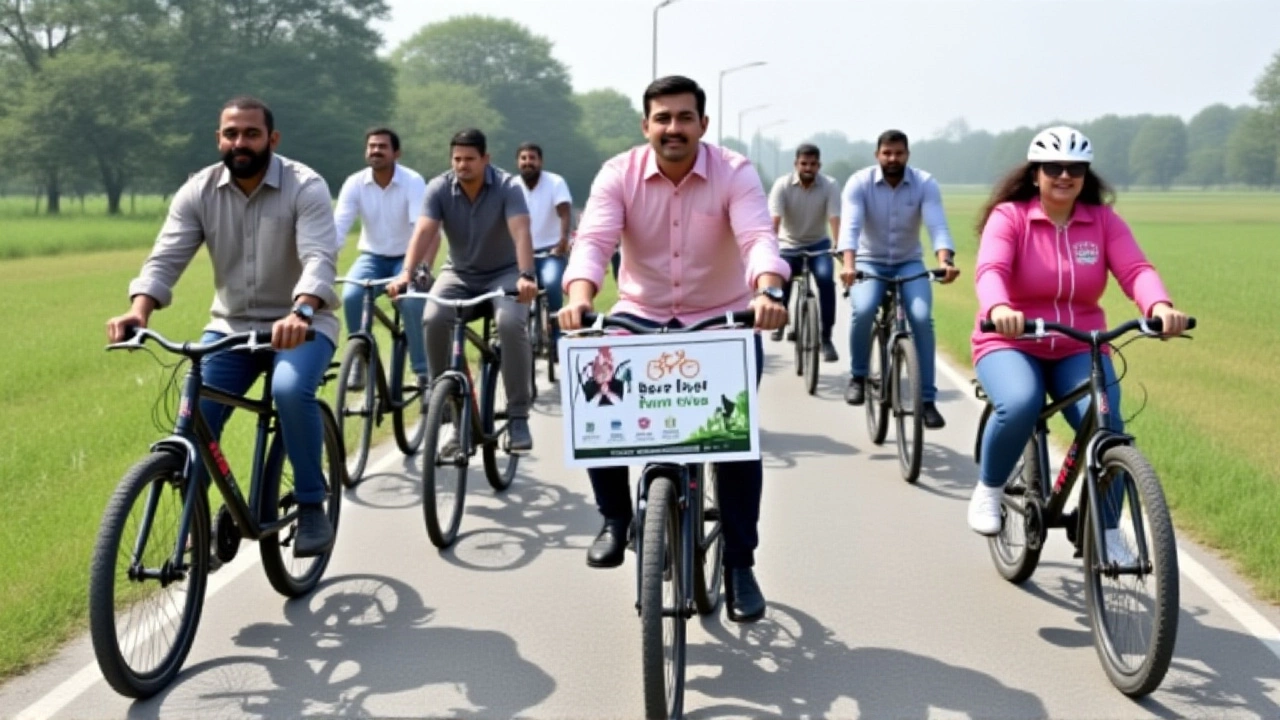
On a crisp morning in Lucknow, the usual hum of traffic was replaced by the rhythmic clicking of bicycle chains. It wasn't a protest or a race. It was something quieter, yet significantly louder in its message. On 18 May 2026, staff from ICAR-Indian Institute of Sugarcane Research (IISR), Lucknow took to their bikes for a campaign that ties personal health directly to national security: "Save Fuel, Save Nation."
The initiative, launched under the umbrella of the Indian Council of Agricultural Research (ICAR), marks a shift in how government research bodies are approaching sustainability. Instead of dry seminars on carbon footprints, they chose motion. The goal? To make fuel conservation and environmental stability tangible through the simple act of cycling.
More Than Just a Ride
Here's the thing about institutional campaigns: they often get lost in paperwork. But this one has teeth. The event wasn't just about burning calories; it was a direct response to a national call for action. The theme, "Save Fuel, Save Nation," mirrors the recent messaging from the Prime Minister of India, emphasizing that energy independence is as critical as food security.
For the employees at ICAR-IISR, the day served as an inspirational programme designed to break the monotony of desk-bound research work. By swapping cars for cycles, even for a short distance, participants were demonstrating a practical commitment to reducing fossil fuel dependency. It’s a small step, sure, but when multiplied across thousands of government employees, the impact on local air quality and fuel consumption becomes noticeable.
The institute framed this not as a one-off gimmick, but as part of a broader strategy to promote "environment-friendly activities" and "healthy lifestyles." In a country where urban pollution is a growing crisis, getting civil servants to lead by example carries weight. It signals that sustainability isn't just a policy document—it's a daily practice.
Connecting Policy to Practice
The link between the campaign and national policy is explicit. The Hindi-language report from ICAR states clearly that the programme was inspired by the Prime Minister's message. This creates a clear line of accountability and motivation. When the highest office in the land prioritizes fuel conservation, institutions like ICAR-IISR are expected to align their internal culture accordingly.
But why cycling? Turns out, it’s the perfect metaphor. Bicycles require zero fuel, produce zero emissions, and offer immediate health benefits. For researchers who spend hours analyzing crop yields and soil health, the irony of contributing to atmospheric degradation via commuting is not lost on them. This campaign bridges that gap.
Interestingly, while specific metrics like total kilometers cycled or liters of fuel saved weren't released in the initial reports, the qualitative impact is significant. It fosters a sense of "collective commitment"—a phrase used frequently in the official release. That psychological buy-in is often harder to achieve than the physical activity itself.

The Broader Impact on Government Culture
This event in Lucknow doesn't exist in a vacuum. Across India, there's a subtle but steady push toward greener government operations. From paperless offices to solar-powered buildings, the public sector is trying to shed its image as an inefficient resource consumer. A cycling campaign fits neatly into this narrative.
Consider the precedent set by similar initiatives in other sectors. Tech companies have long promoted bike-to-work schemes to boost employee morale and reduce parking congestion. Now, agricultural research institutes are joining the fold. It suggests a maturing understanding that employee well-being and environmental stewardship go hand in hand.
Experts argue that such visible actions help normalize sustainable behavior. When colleagues see each other cycling, it reduces the social friction of choosing eco-friendly options over convenient ones. It builds a community norm rather than enforcing a rule.
What Comes Next?
The details of future events remain unclear, but the launch on 18 May 2026 sets a benchmark. Will this become an annual tradition? Could it expand to include families or local schools? These are questions the institute will likely address in coming months.
For now, the focus remains on sustaining momentum. The challenge for ICAR-IISR and similar organizations is to move beyond awareness-raising to measurable change. Can they track reduced vehicle usage? Can they integrate cycling infrastructure into campus planning? The ride has started; the destination is a more sustainable institution.
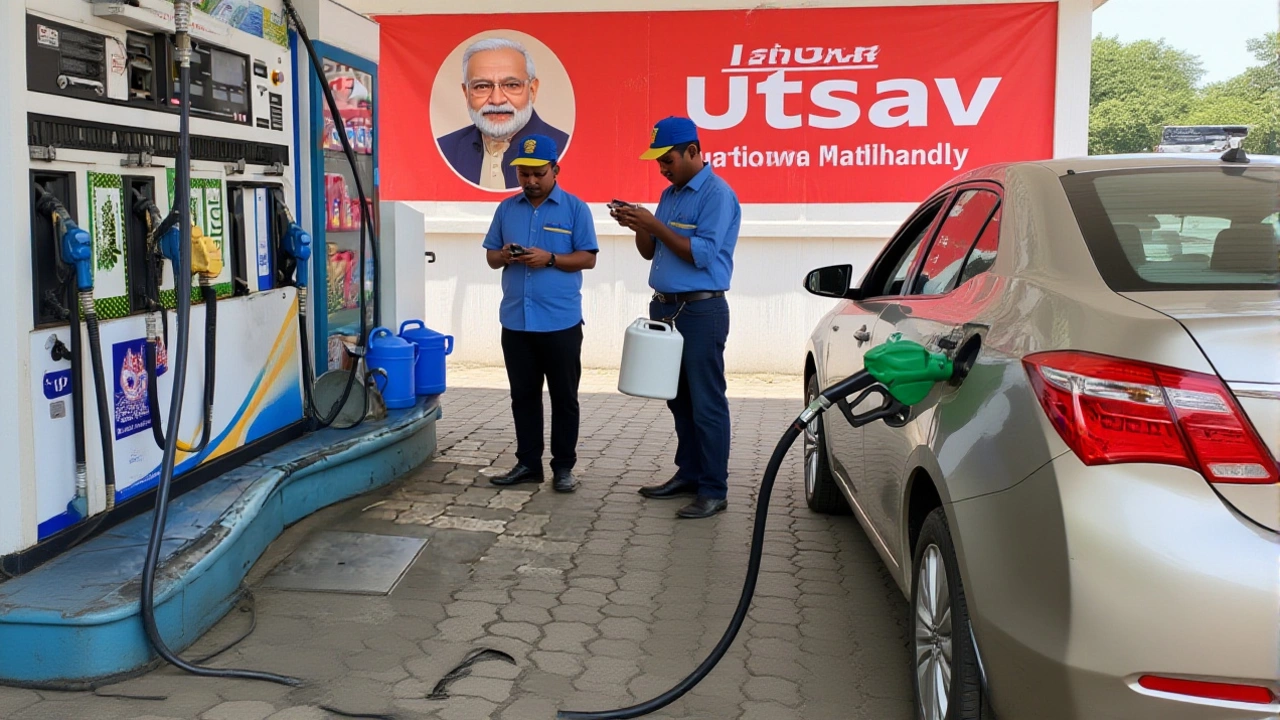
Background: ICAR's Role in National Development
To understand the significance, you need to look at who's behind the handlebars. ICAR is India's apex body for agricultural research and education. With dozens of institutes across the country, it plays a pivotal role in ensuring food security. Its location in Lucknow, a major hub for sugarcane research, places it at the heart of one of India's most important agricultural sectors.
Historically, ICAR has focused on technological advancements in farming. However, modern challenges require holistic approaches. Climate change affects crop patterns, and energy costs impact farm viability. By promoting fuel conservation among its own staff, ICAR is modeling the efficiency it hopes to see in the wider agricultural ecosystem. It’s a lesson in walking the talk.
Frequently Asked Questions
Who organized the 'Save Fuel, Save Nation' cycling campaign?
The campaign was organized by ICAR-Indian Institute of Sugarcane Research (IISR), Lucknow, an institute under the Indian Council of Agricultural Research (ICAR). It was held on 18 May 2026 specifically for the institute's employees to promote fuel conservation and healthy lifestyles.
Why did ICAR choose cycling for this awareness campaign?
Cycling was chosen because it is a zero-emission, fuel-free mode of transport that also promotes physical health. It serves as a practical demonstration of the "Save Fuel, Save Nation" message, linking individual wellness with environmental sustainability and national energy security.
Is this campaign linked to any government policy?
Yes, the campaign is explicitly inspired by the Prime Minister of India's message "Save Fuel, Save Nation." It aligns with broader national efforts to encourage fuel conservation, reduce carbon footprints, and strengthen collective commitment to nation-building through environmentally friendly practices.
Where and when did the event take place?
The event took place on 18 May 2026 in Lucknow, Uttar Pradesh. It was hosted at the premises of ICAR-IISR, involving staff members from the institute in a coordinated cycling activity and inspirational programme.
What are the main objectives of this initiative?
The primary objectives are to raise awareness about fuel conservation, promote environmental sustainability, and encourage healthy lifestyles among employees. It aims to foster a culture of collective responsibility towards nation-building and environmental protection within the government research sector.